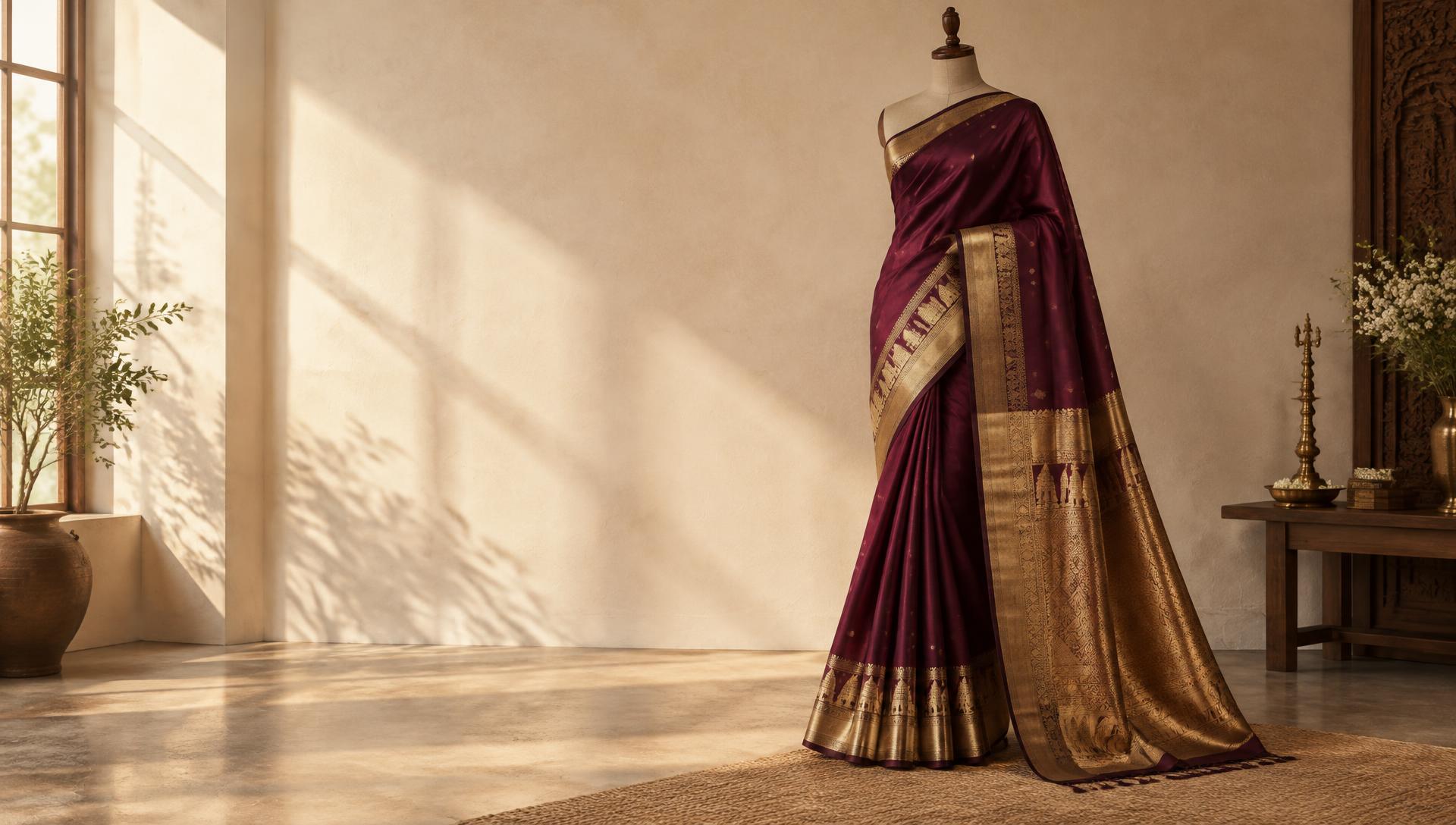
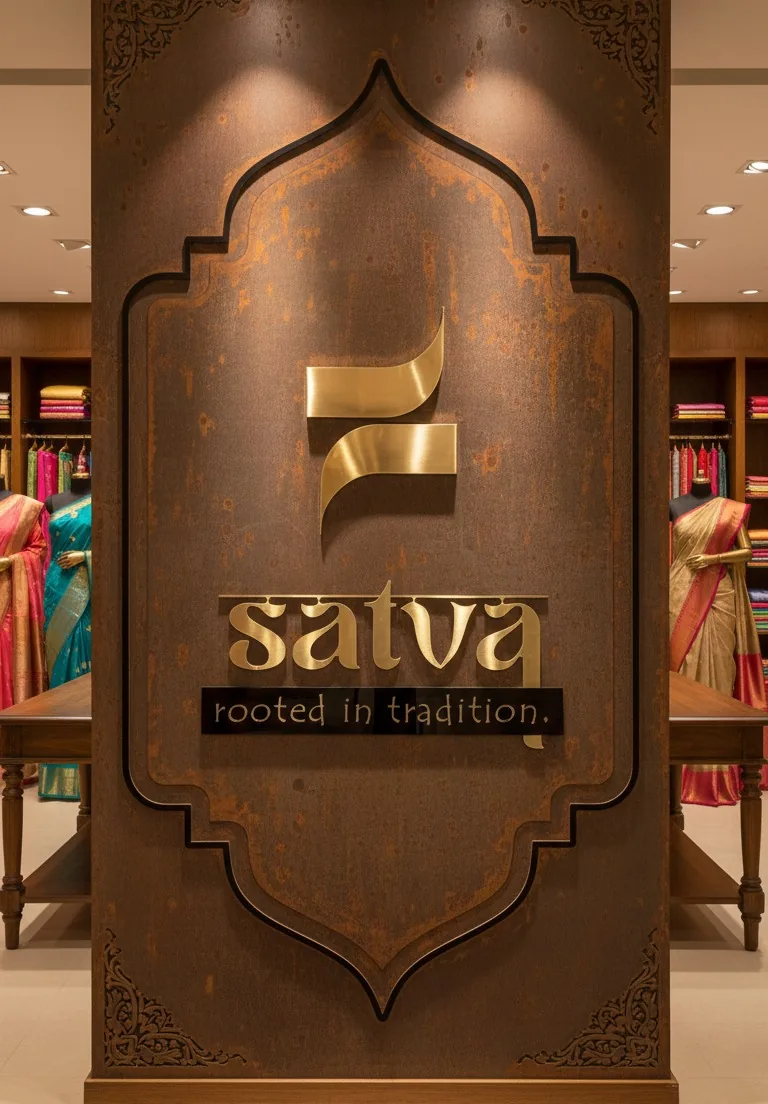
Satva
Rooted in tradition
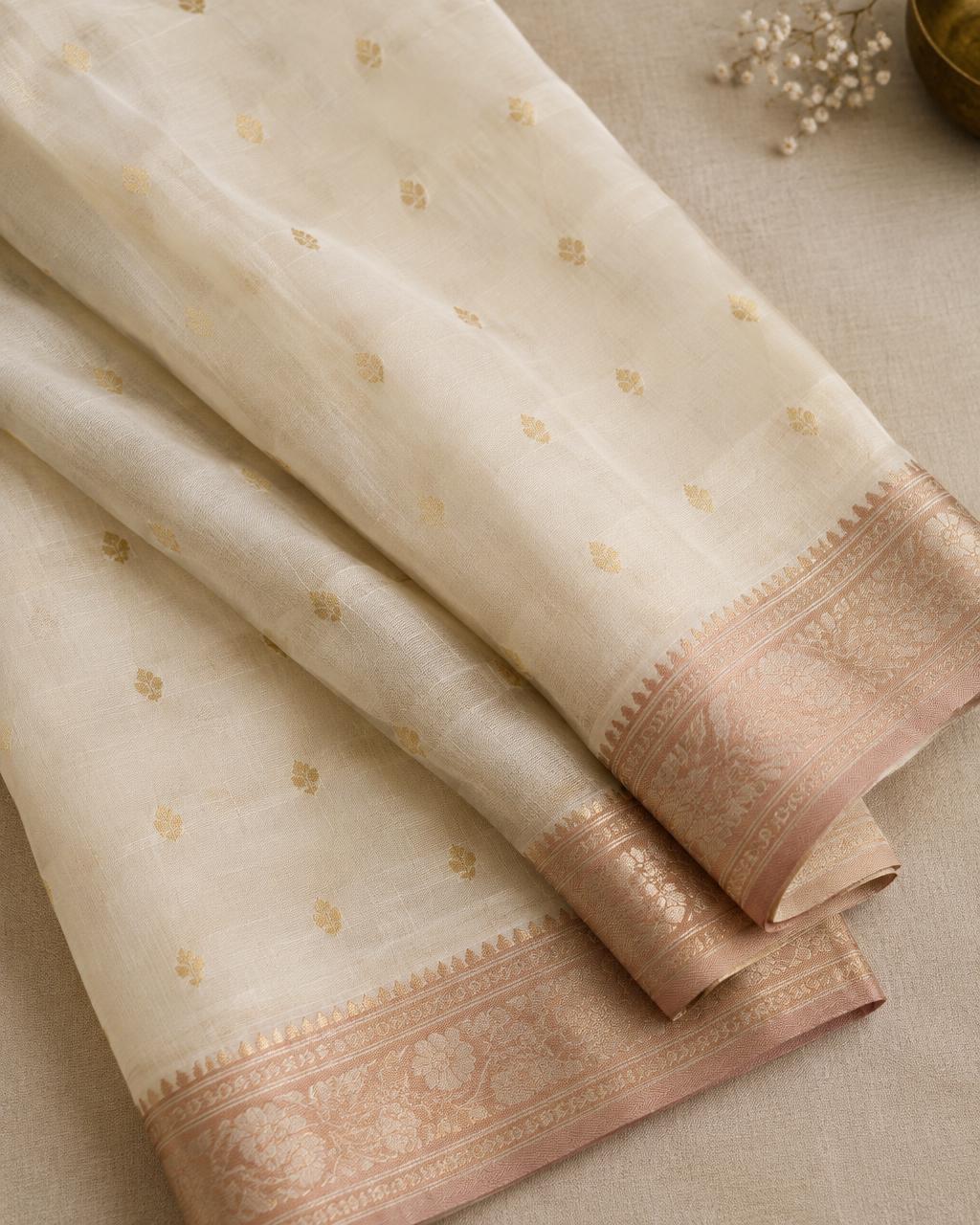
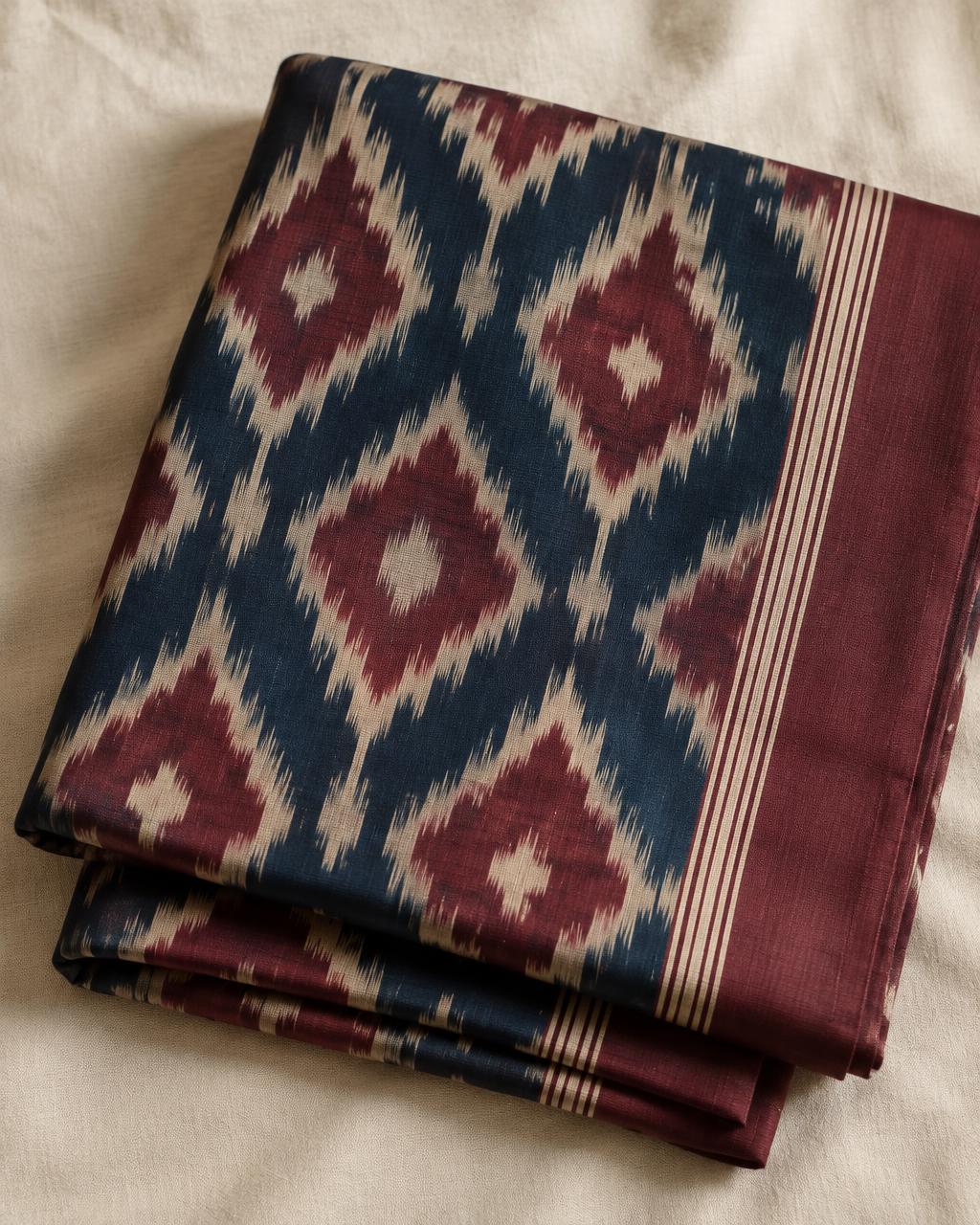
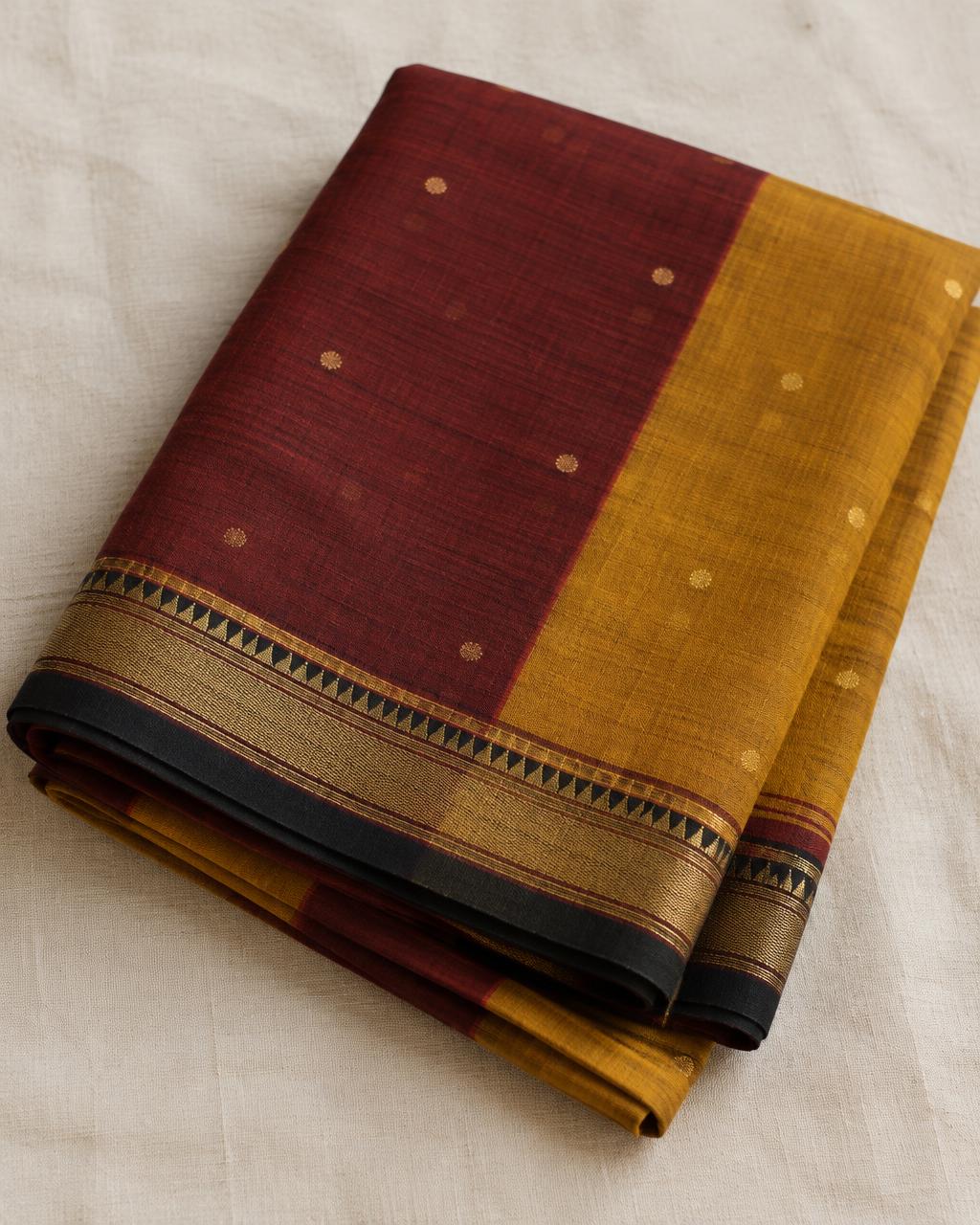
Kanchipuram, Maheshwari, Banarasi, Chanderi, Pochampally and Ilkal — brought together in one room in Belagavi, and chosen one at a time.
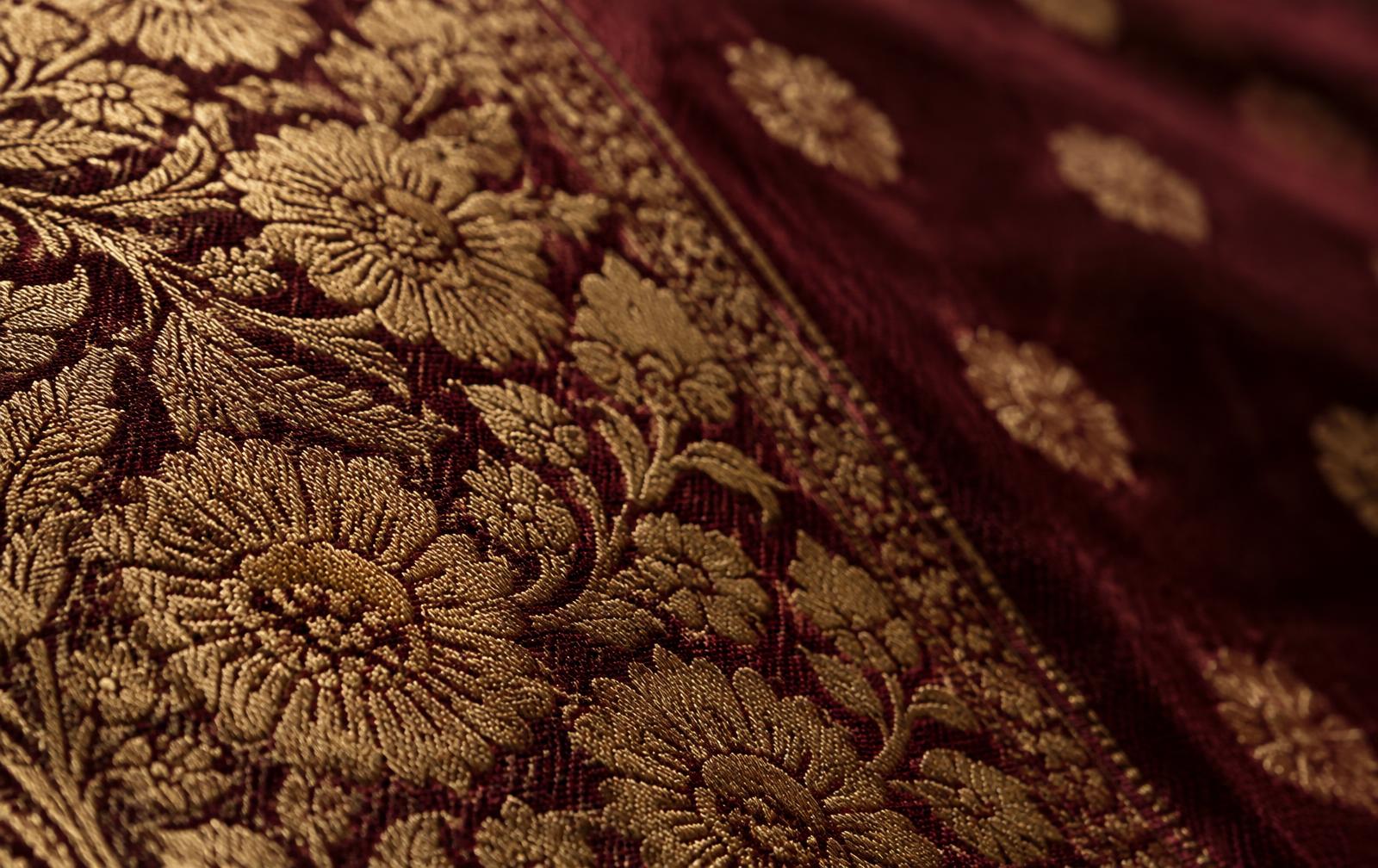
A sari is not printed. It is argued with, thread by thread, until the pattern gives in.
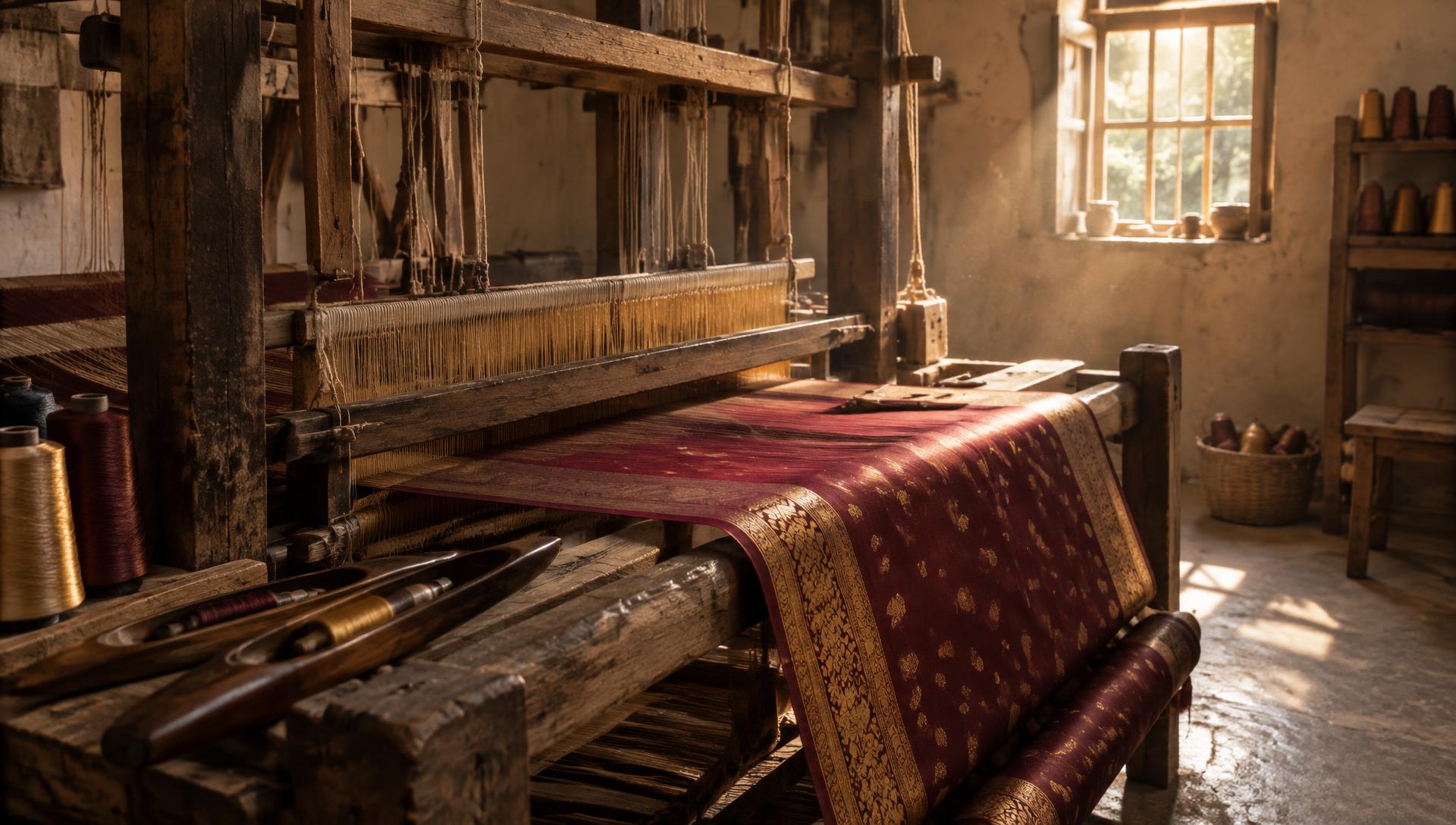
Everything here came off a handloom — pit loom, frame loom, throw shuttle. What follows is what we keep, how it is made, and where it is kept.
The collection
Six weaves we keep
Each is a different argument about silk, cotton and zari. Hover or tap a name to see it.
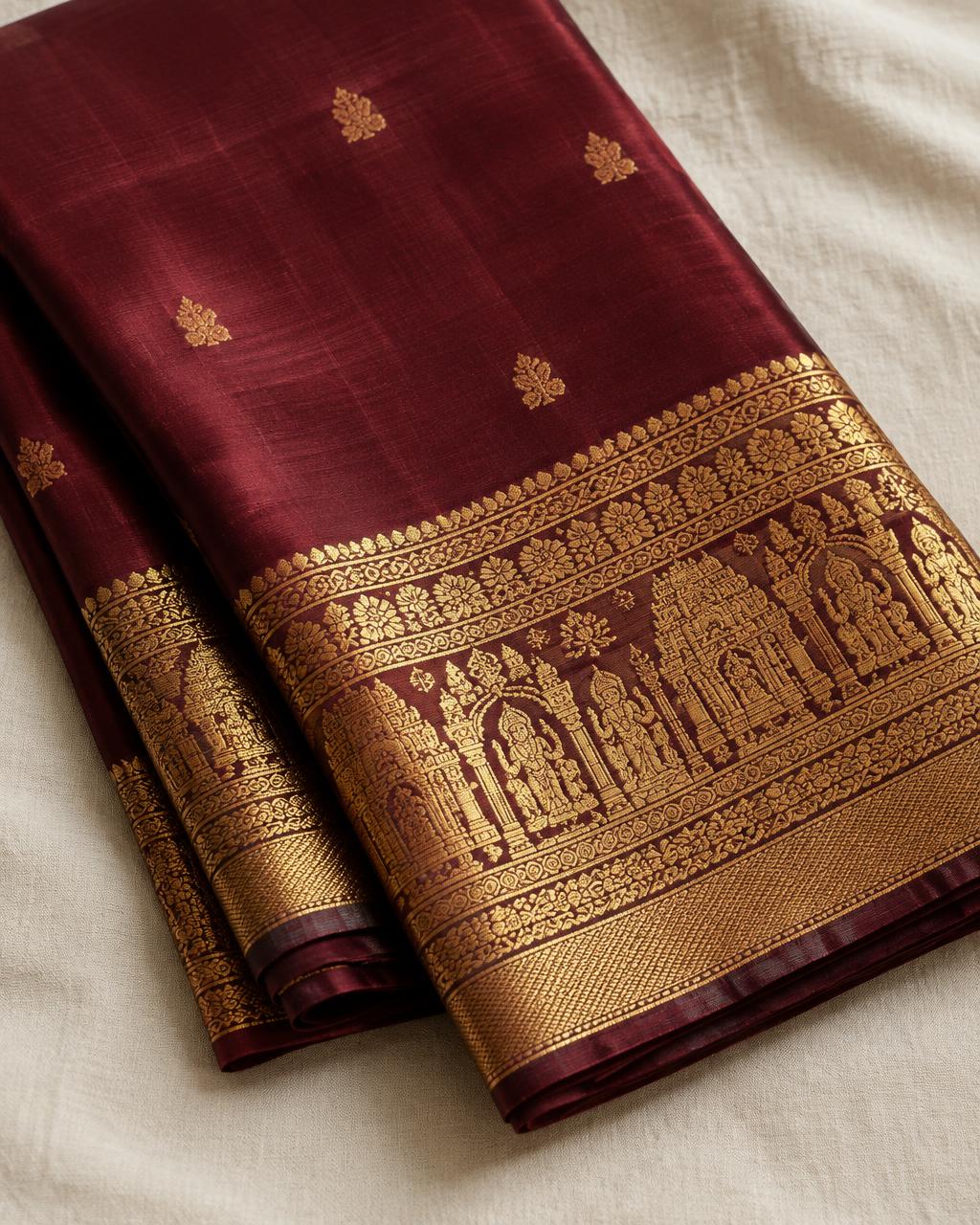
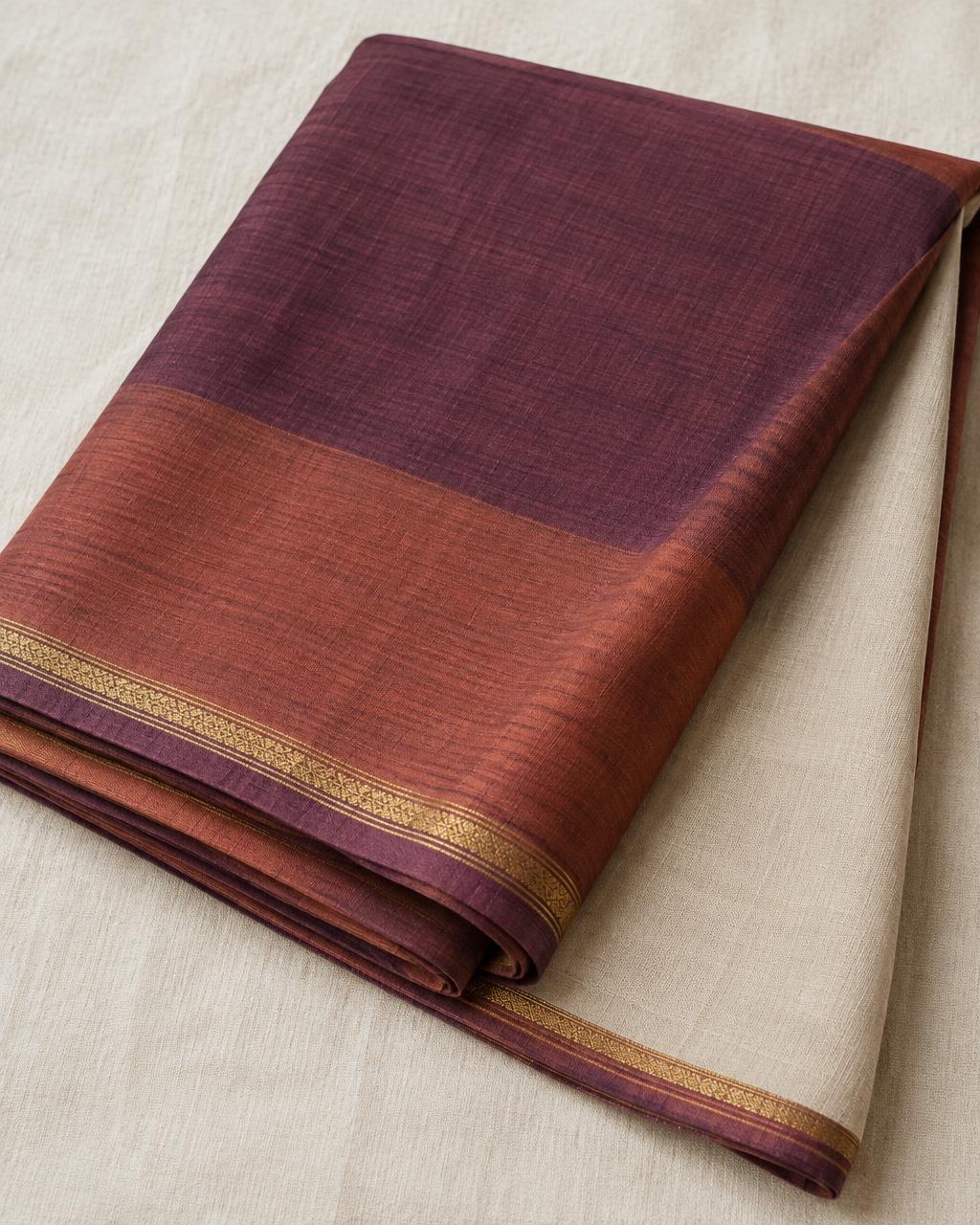
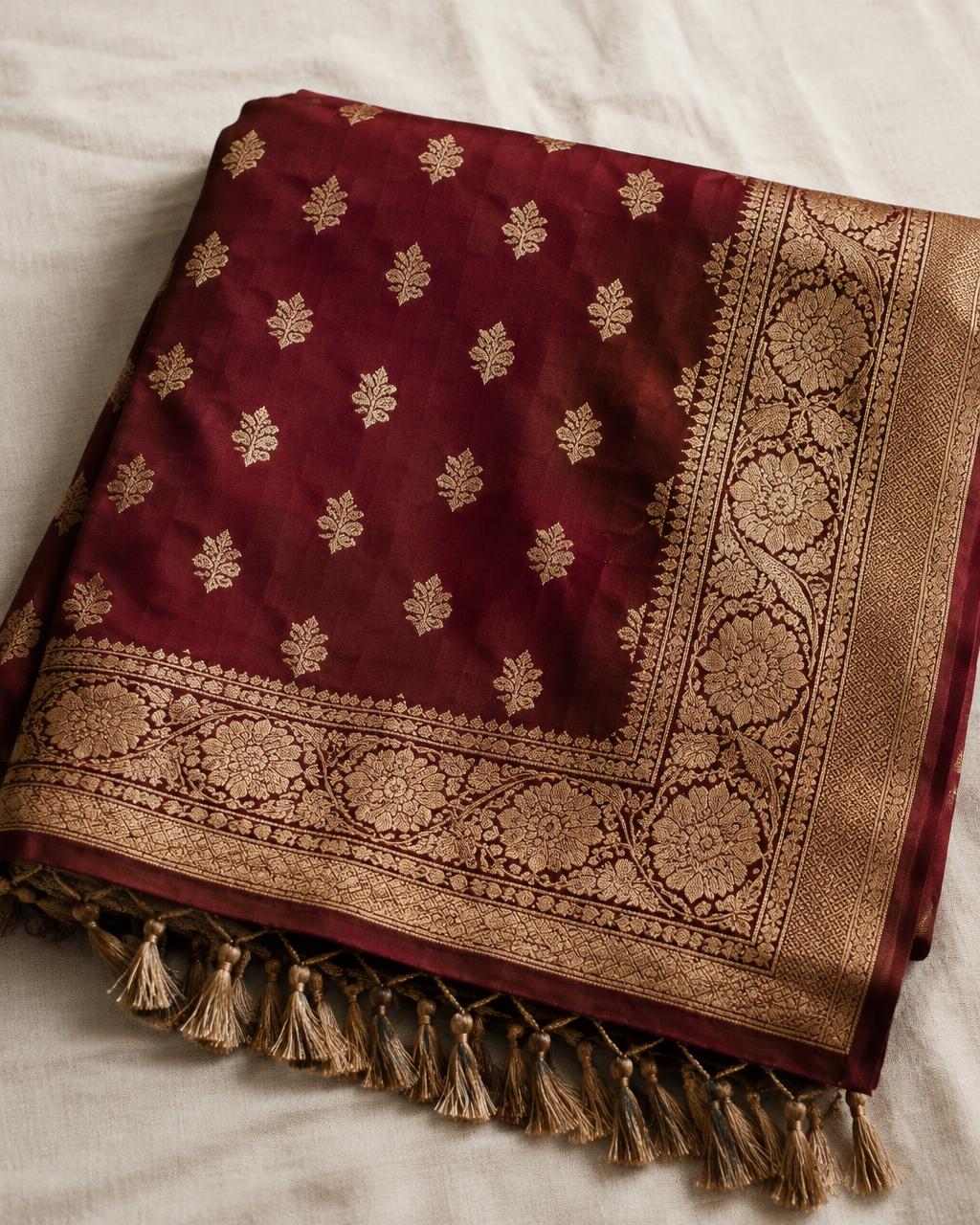
Woven in
Tamil Nadu
In the making
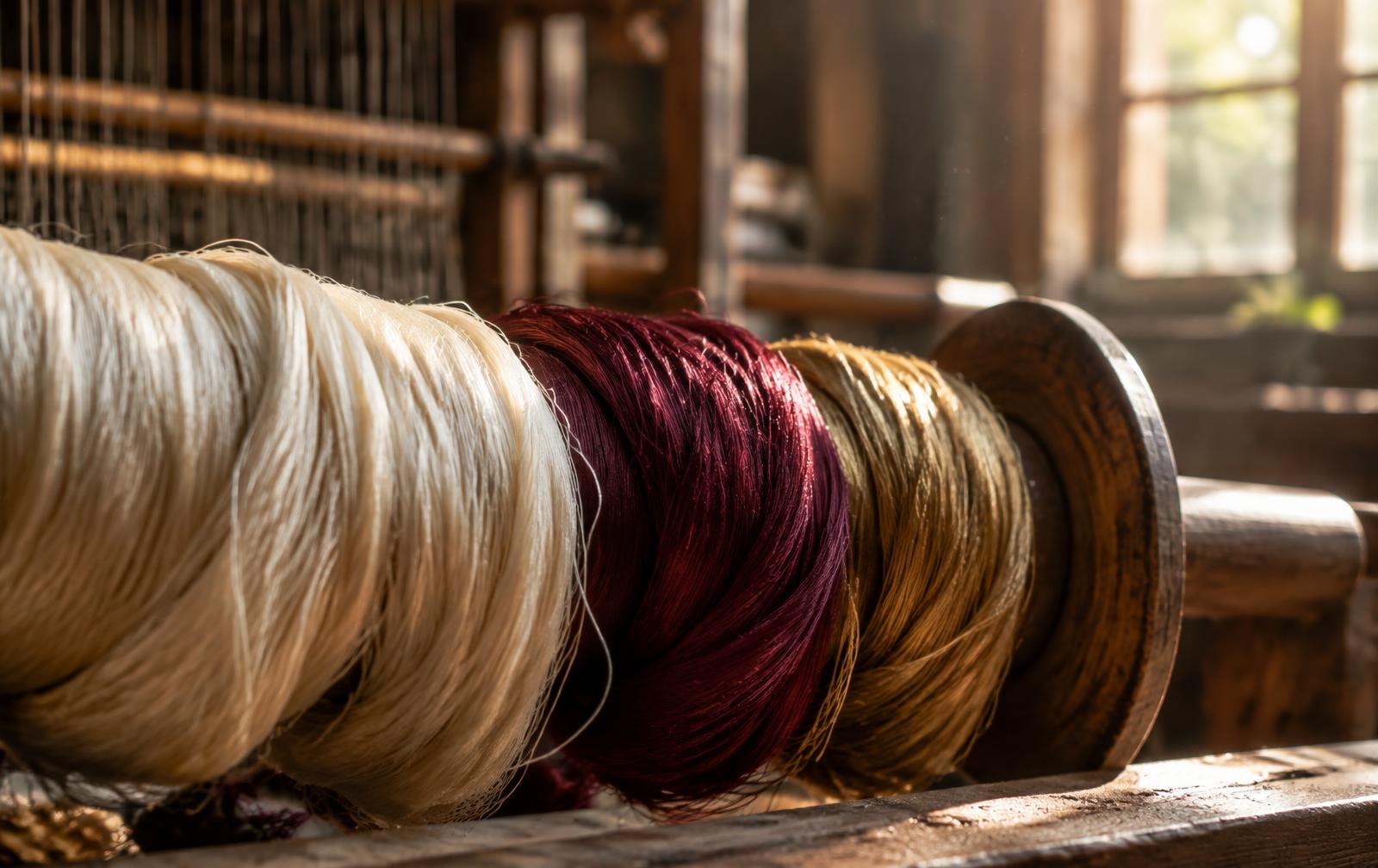
Dye, warp, and eighteen days of arguing.
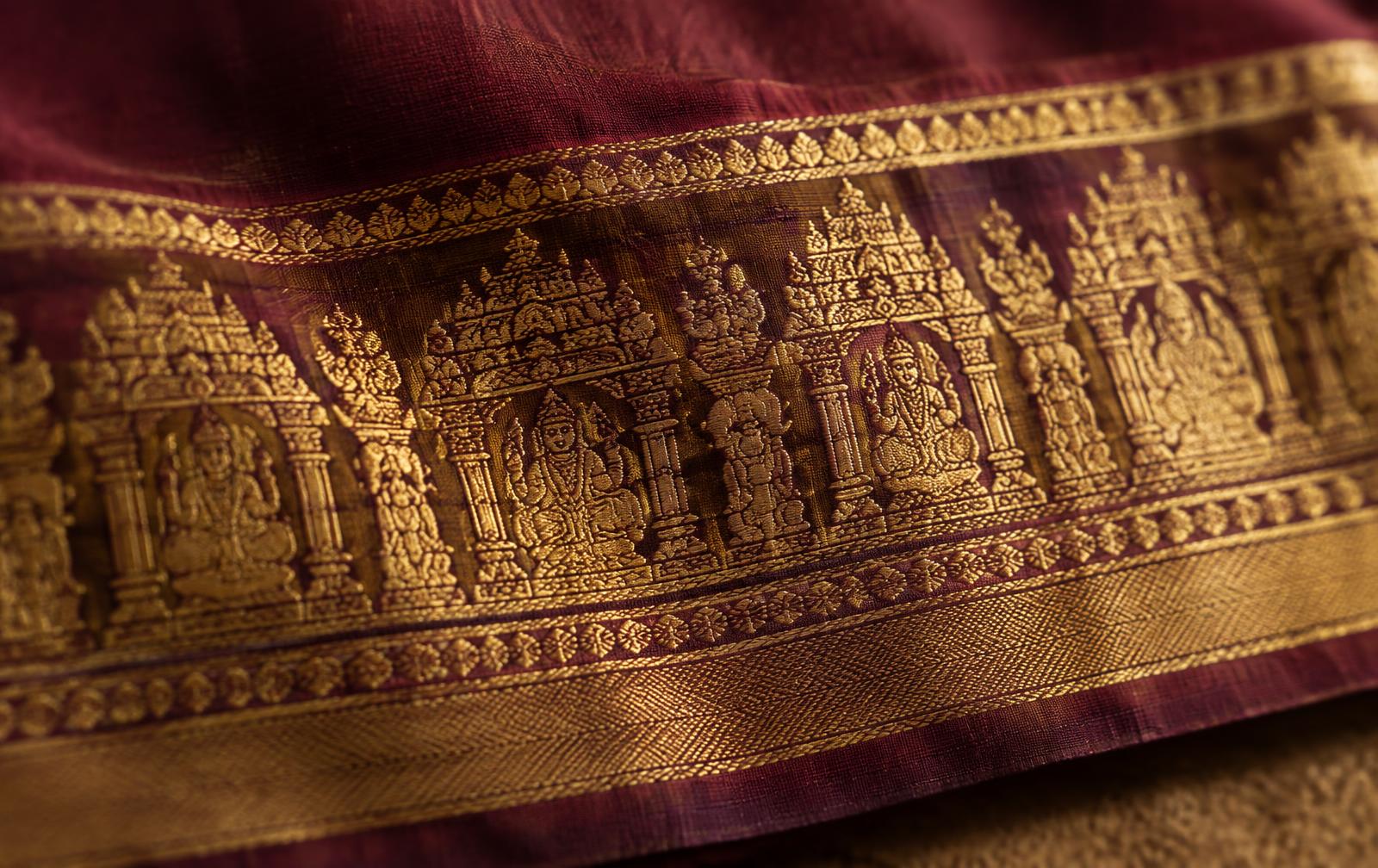
A Kanchipuram takes about eighteen days on the loom; a Banarasi more. Nothing here is finished by machine except the hem.
Where it comes from
We buy in small numbers, direct from weavers and cooperative clusters, and go back to the same looms.
- Kanchipuram
- Maheshwar
- Varanasi
- Chanderi
- Pochampally
- Ilkal
- Hubballi
The family
Chosen by hand, one sari at a time.
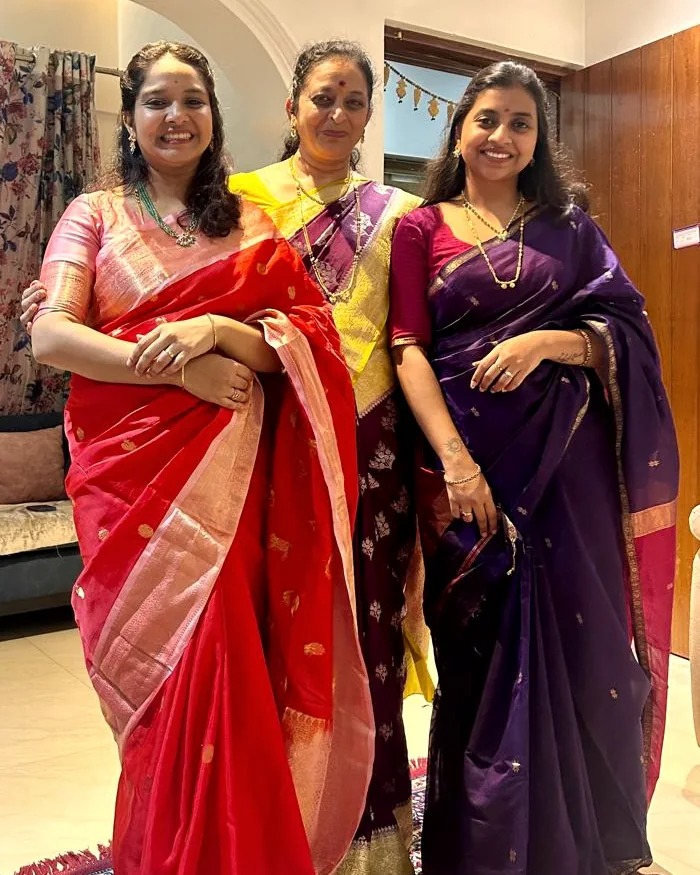
Satva is run by the Sangle family. It began in February 2026 as a passion project. We have always loved handloom, and wanted to share the saris we would choose for ourselves.
We are small, and we mean to stay that way. Every piece on our shelves has been unfolded, held to the light and looked at closely by one of us: the weave, the zari, the fall of the pallu.
Come in and you will usually find one of us in the room, happy to tell you where a sari was woven and how it was made.
The Sangle family
Visit
Come and hold it up to the light.
A photo cannot tell you how a silk-cotton falls, or how heavy the zari really is. Come by the shop, or write first and we will keep it aside for you.
Somwar Peth, Tilakwadi, Belagavi, Karnataka 590006, India
Open 11 am – 8:30 pm · Sundays closed
Enquire
Ask us about a sari
Tell us the weave, the colour, and when you need it. We will write back with what is on the shelf and what is still on the loom.